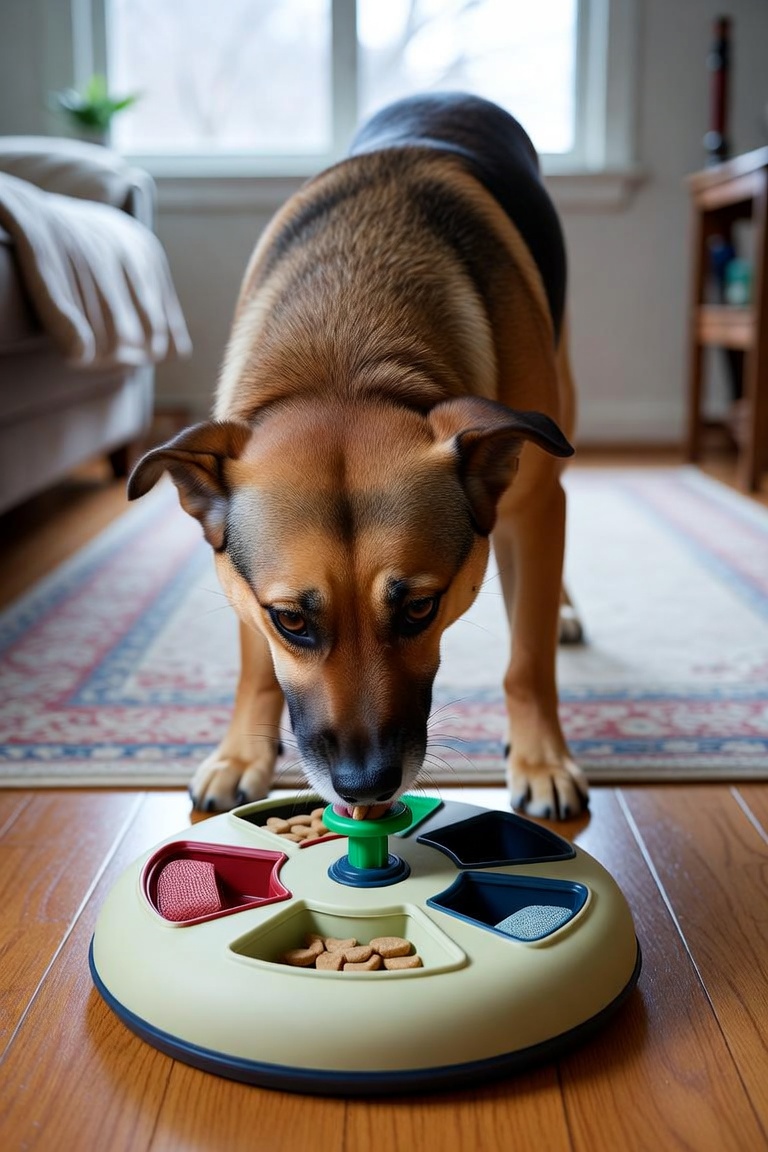
You walked the dog. You threw the ball for an hour. And your dog is still eating the baseboards. Here's the part nobody tells new dog owners: exercise tires the body, but a lot of "bad behavior" comes from a bored brain — and you can't outrun a bored brain. That's where enrichment comes in.
What Enrichment Actually Is
Enrichment is any activity that makes your dog think, problem-solve, or use natural instincts — sniffing, foraging, working for food, figuring things out. It's not a replacement for walks; it's the other half of the equation. Ten to fifteen minutes of genuine brain work can settle a dog in a way a second walk often doesn't, because problem-solving is mentally taxing in a way trotting on a leash isn't.
The signs your dog needs more of it are the classics: destructive chewing despite plenty of exercise, restlessness in the evening, shadowing you around the house, barking at nothing, and "getting into stuff" the moment you look away.
The Easiest Wins
Treat-dispensing and puzzle toys. The workhorse of enrichment. Your dog works food out of a toy instead of inhaling it from a bowl — foraging instinct engaged, meal slowed down, brain occupied. Start easy so your dog wins quickly, then increase difficulty. A dog that gives up on a too-hard puzzle learns puzzles are pointless; a dog that keeps winning becomes obsessed in the best way.
Feed meals as enrichment. The simplest upgrade there is: skip the bowl a few times a week and serve breakfast in a puzzle toy or scattered in the yard for a sniff-and-find. Same calories, ten times the engagement.
Sniff walks. One walk a week, let the nose lead. Slow, meandering, sniff everything. Sniffing is information-processing for dogs — a 20-minute sniff walk can be more tiring than a 40-minute march.
Chew sessions. Chewing itself is enrichment and a natural stress-reliever. A durable bone in a dedicated evening chew session gives the chew drive a legal outlet — which, as covered in our heavy chewers guide, is often what saves your furniture.
Rotate everything. The same three toys out every day become furniture. Keep most toys stored, rotate a few out at a time, and each rotation feels like new-toy day.
A Simple Weekly Rhythm
No spreadsheet needed. A rhythm that works for most dogs: puzzle-fed meals two or three times a week, one sniff walk, evening chew sessions on the restless days, and toy rotation every weekend. That's maybe 15 minutes of your effort total — most of enrichment is your dog doing the work, which is precisely the point.
Glow toys extend the window too: evening fetch after sunset counts as both exercise and novelty, and desert summers (we're in Palm Springs — we get it) make after-dark the only sane playtime for part of the year.
When Enrichment Isn't Enough
Enrichment fixes boredom. It doesn't fix separation anxiety, pain-driven behavior, or fear — if the destruction only happens when you leave, or comes with panic signs, loop in your vet or a certified trainer. And for young puppies, keep sessions short and easy; a frustrated puppy isn't being enriched.
The Bottom Line
If your dog has energy that exercise doesn't fix, the missing piece is almost always mental. One puzzle feeder, one sniff walk, a chew routine, and a toy rotation will change your evenings within a couple of weeks.
Find interactive and enrichment toys built to survive real dogs in our Toys collection, and watch our test dogs solve (and occasionally cheat at) puzzles on TikTok @mutt.toy and the Mutt Toy YouTube channel.

